Rankboard gives our SEO work one clear operating system. Research, content, publishing, and reporting finally move together instead of living in separate tools.

Growth team
B2B software company
Research the right topics, create content, plan distribution, and track organic growth from one focused workspace.
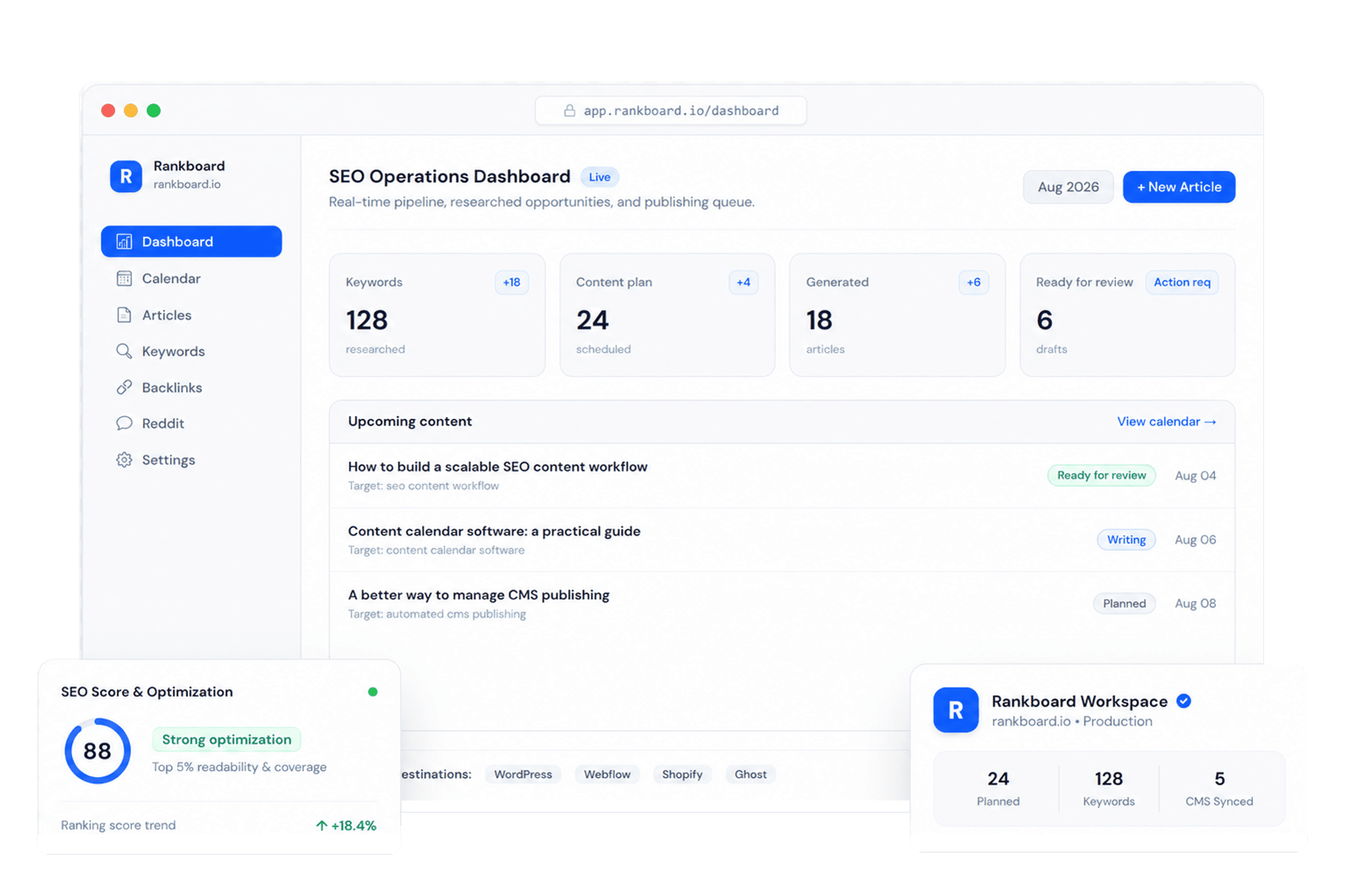
Rankboard connects research, content production, publishing, and distribution so your team always knows what matters next.
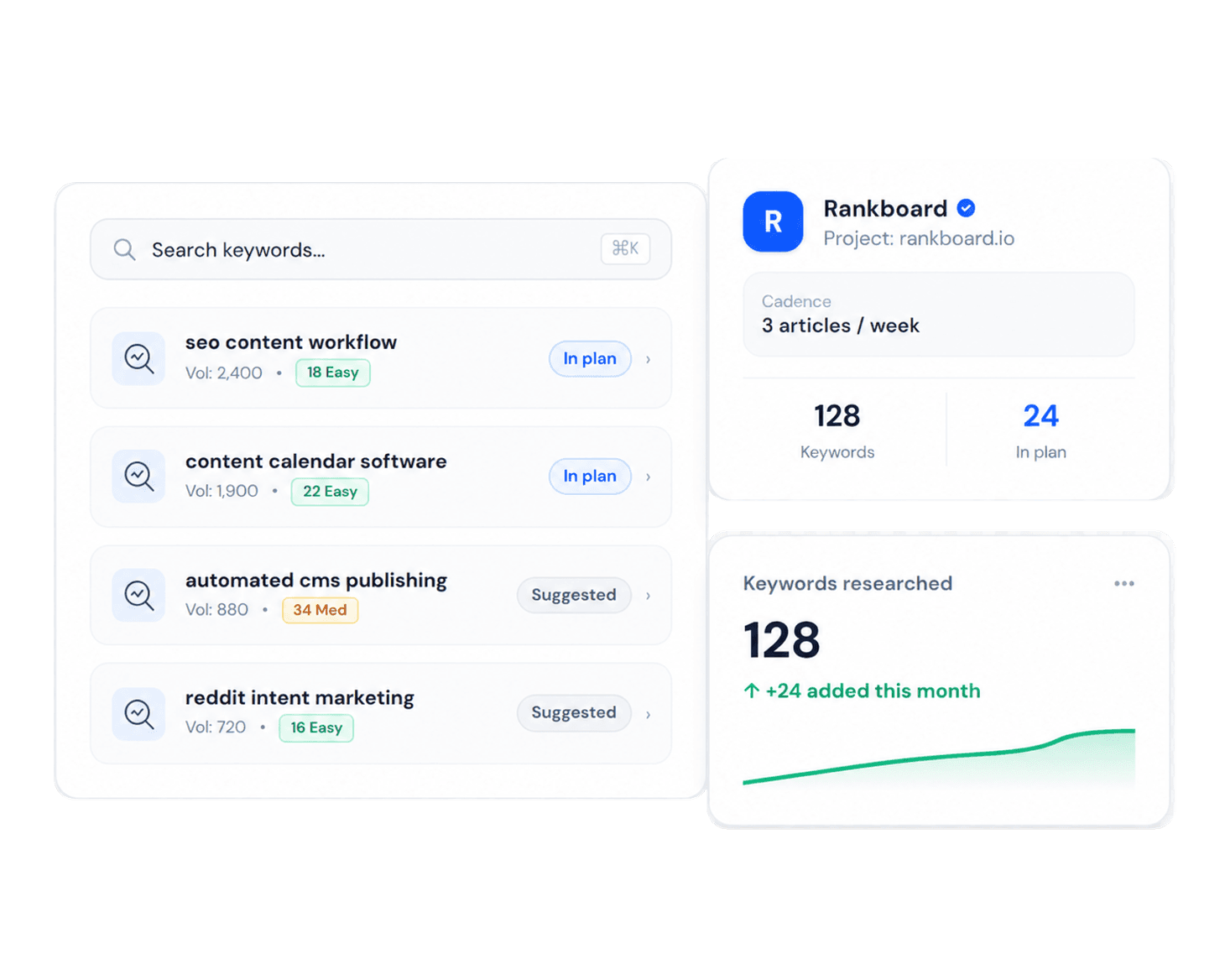
Start with the right topics, organize work by priority, and move every opportunity through a clear, reviewable workflow.
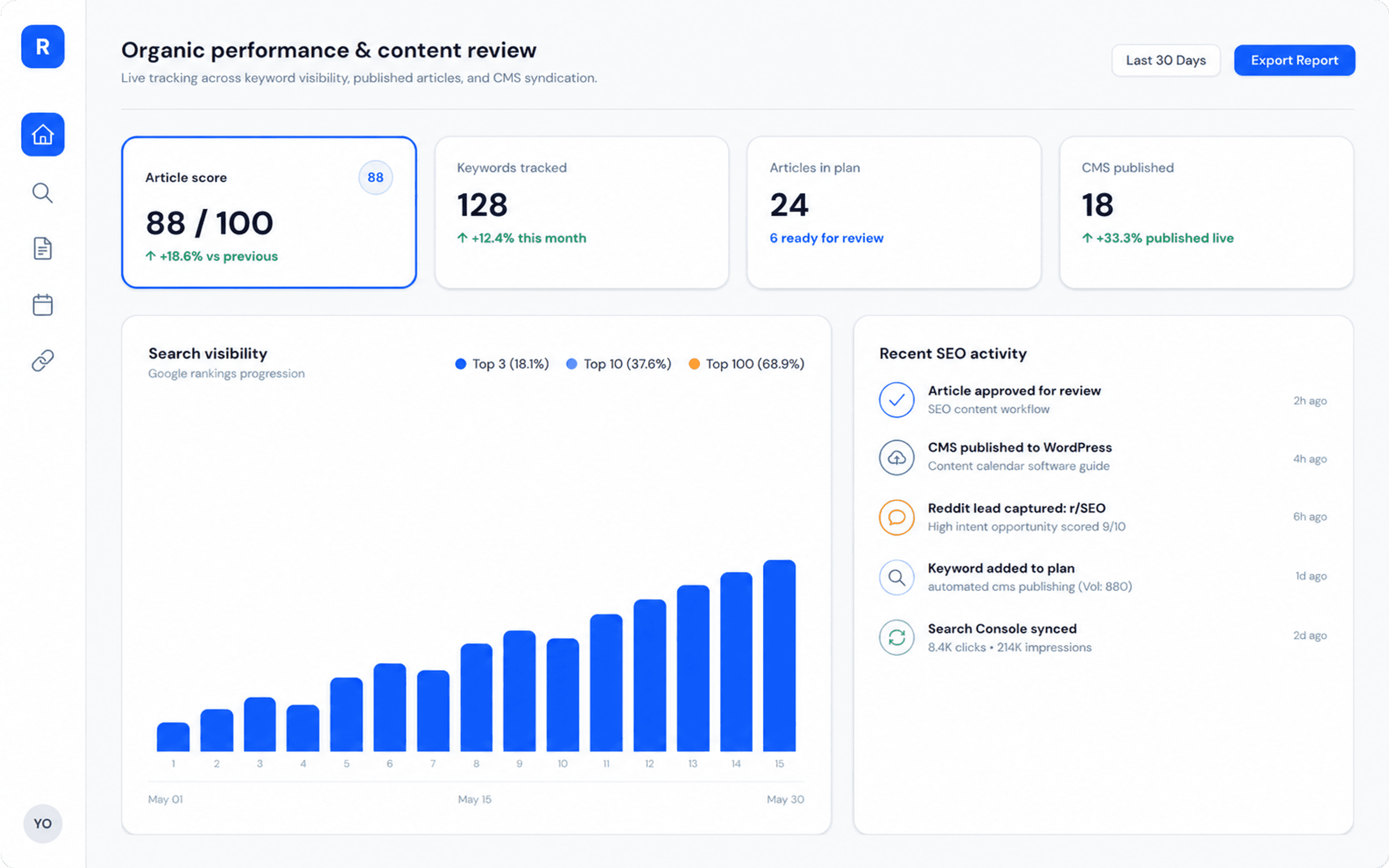
Keep drafts, feedback, approvals, publishing, and performance in one system—so good ideas make it to market on schedule.
One calm workflow for the people responsible for organic growth.
Rankboard gives our SEO work one clear operating system. Research, content, publishing, and reporting finally move together instead of living in separate tools.
B2B software company
The review-first workflow keeps the team moving without giving up control. We can see what is planned, what needs approval, and what has already shipped.

SaaS marketing team
Instead of guessing what to write next, the roadmap is connected to real search demand. That makes prioritization much easier across the whole month.

Organic growth team
Rankboard turns an overwhelming SEO backlog into a workflow our team can actually run. Every task has context, status, and a clear next action.

Growing startup
The publishing calendar helps us protect consistency. Everyone can see upcoming articles and social posts without another planning spreadsheet.

Content-led business
Backlink submissions are visible alongside the rest of the campaign, so progress is easy to follow and nothing disappears into a private checklist.

Early-stage SaaS
Rankboard brings the essential parts of a repeatable SEO program into one connected workspace.
Find opportunities that fit your website, audience, and goals—then turn them into an actionable plan.
Move the right work through briefs, drafts, review, and publishing without losing context.
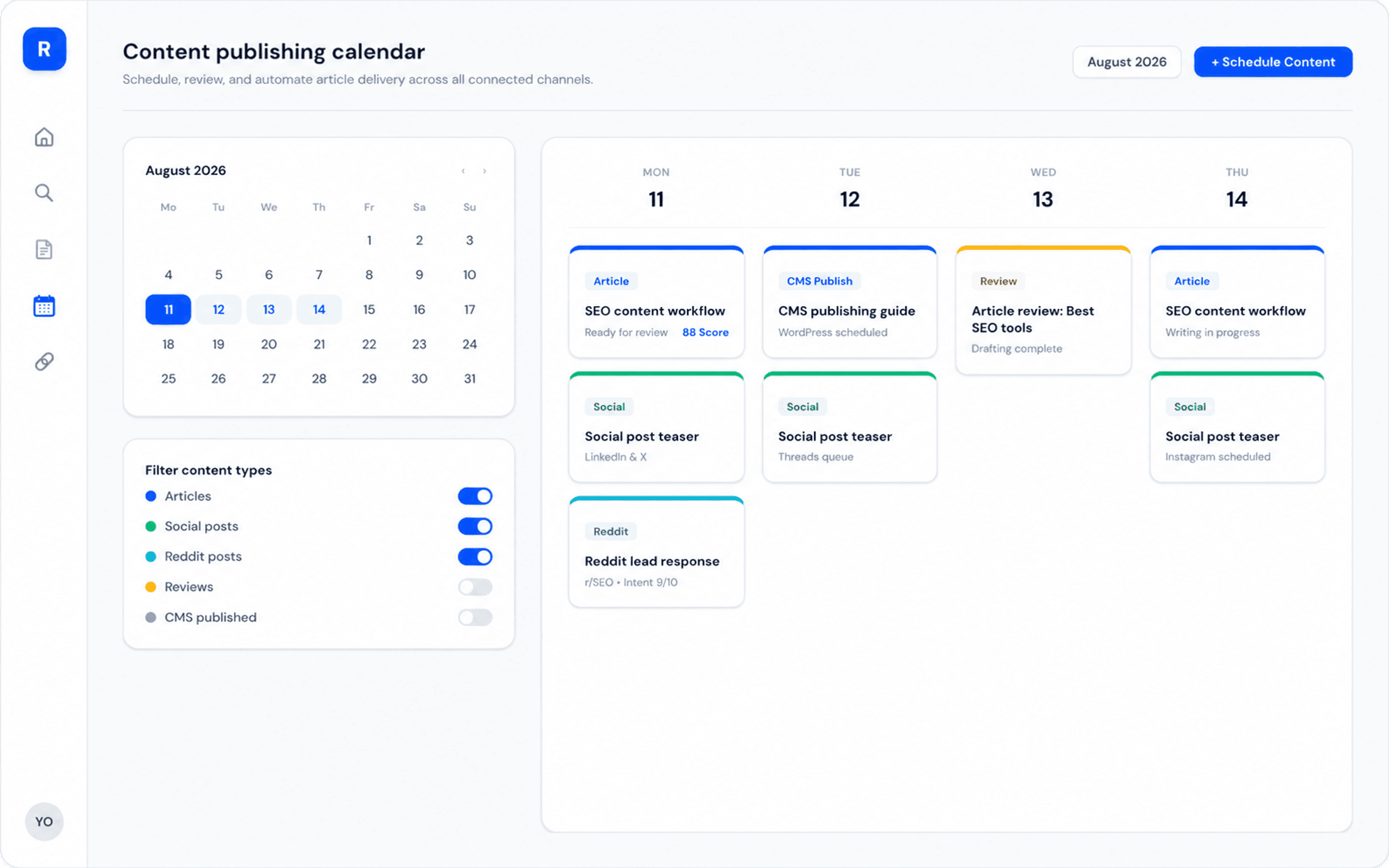
See every article and distribution task on a practical monthly calendar.
Keep the work connected to the visibility and organic growth it is designed to create.
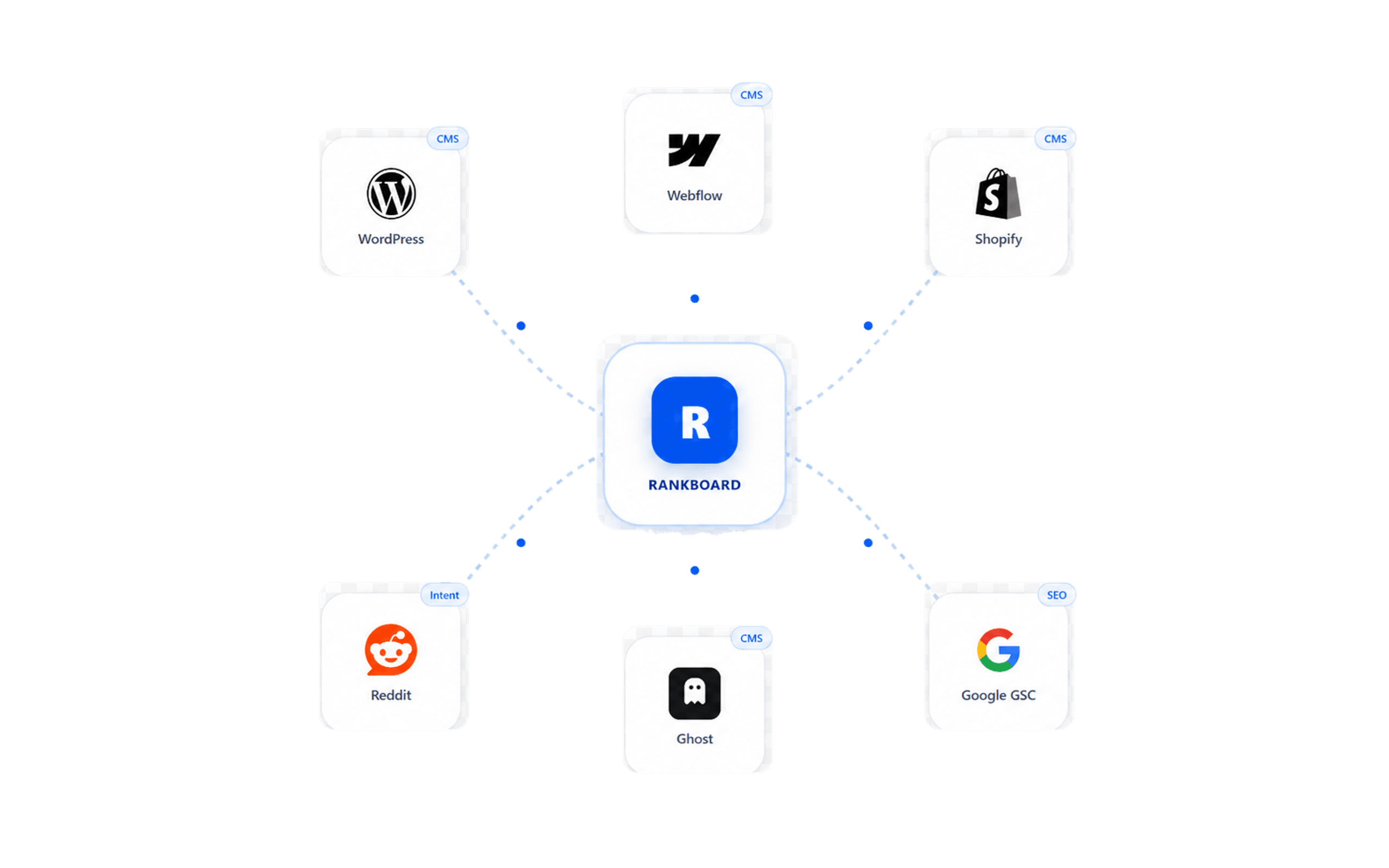
Bring publishing, analytics, and distribution signals together as your program grows.
Rankboard covers the practical work behind sustainable SEO, from the first opportunity to the result you can measure.
Turn your website, audience, and market into a focused keyword roadmap instead of a generic list.
Keep articles, social posts, and distribution work organized in one practical calendar.
Approve, request changes, and keep your team in control before content moves to publishing.
Follow directory opportunities from planned to submitted with the Rankboard team handling the work.
Connect the work being done to the search visibility and organic growth it is meant to create.
Research, content, publishing, distribution, and reporting stay connected from one campaign to the next.
Transparent monthly plans with dedicated per-project allowances. No per-seat charges or surprise overages.
For solo founders, bloggers, and single websites establishing their initial search visibility.
Plan allowances & features:
No credit card required
For growing SaaS, startups, and marketing teams scaling continuous organic traffic with editorial control.
Plan allowances & features:
No credit card required
For digital agencies, multi-brand studios, and high-volume publishers managing multiple client roadmaps.
Plan allowances & features:
No credit card required
Everything you need to know about the product, content control, and organic growth workflow.
Run the work behind sustainable search visibility from one focused Rankboard workspace.